
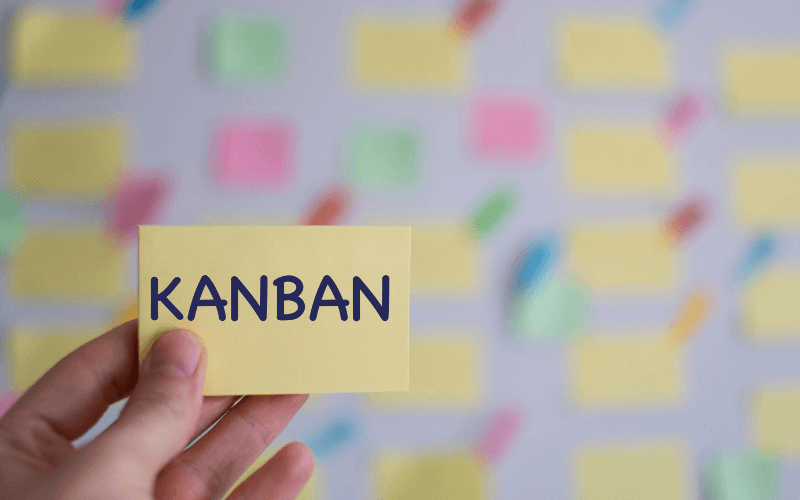
Have you ever felt that your productivity could be at another level, but don't know where to start? The Kanban task method might be the answer you're looking for! In this article, we'll explore the 7 advantages of Kanban, a visual and flexible approach that has revolutionized the way professionals and teams manage their daily activities. Originating from Toyota's production system, Kanban adapts to different contexts and offers concrete benefits for those seeking organization and efficiency. With it, you'll learn to prioritize tasks, visualize workflow, and reduce waste, transforming your routine and boosting your results. Get ready to discover how this method can be a game-changer on your journey to exceptional productivity! Don't miss the chance to transform the way you work!
What is Task Kanban?
Kanban is a visual work management method that uses cards, boards, and columns to help teams visualize workflow, identify bottlenecks, and improve efficiency. Originating from Toyota's production system, Kanban was developed to optimize production and minimize waste, but its application has expanded to various sectors, including software development, marketing, education, and even personal task management. Essentially, Kanban allows you to see work as it goes through different stages, providing a clear and continuous view of progress and priorities.
The heart of Kanban is the board, which is divided into columns representing different phases of the work process, such as "To Do," "In Progress," and "Done." Each task is represented by a card that moves through these columns as the work progresses. This visual approach allows all team members to instantly see the current status of the work and quickly identify where delays or problems may be occurring.
Furthermore, Kanban is highly flexible and can be adapted to meet the specific needs of any team or project. It doesn't impose a rigid structure, but provides a framework that encourages continuous improvement and adaptation to change. This makes Kanban a powerful tool not only for managing tasks, but also for fostering a culture of transparency, collaboration, and efficiency.
History and evolution of Kanban
The history of Kanban begins in Japan in the 1940s, when Toyota introduced an innovative production system to improve efficiency and quality on its assembly lines. Inspired by the supermarket system, where products are replenished as needed, Taiichi Ohno developed a method to signal the need for more materials on the production line, using visual cards called "kanbans" (meaning "card" or "signal" in Japanese). This system helped Toyota reduce excess inventory, minimize waste, and improve efficiency.
Over time, the concept of Kanban evolved and expanded beyond Toyota's assembly lines. In the 2000s, David J. Anderson adapted Kanban principles for software project management, creating what we now know as task Kanban or knowledge Kanban. Anderson combined Kanban's visual practices with agile development principles, creating a method that helps teams manage their work more effectively, promoting continuous delivery and constant improvement.
Since then, Kanban has been adopted by organizations worldwide and across various sectors. Its flexibility and adaptability make it suitable for any type of work that can be viewed as a workflow. Technology companies, marketing agencies, educational institutions, and even individuals have benefited from implementing Kanban to organize their activities, improve communication, and increase productivity.
Workflow visualization
One of the biggest advantages of Kanban is its ability to provide a clear and constant visualization of the workflow. When tasks are visually represented on a Kanban board, it becomes much easier to understand what is happening at each stage of the process. The columns on the board represent different stages of the work, and the cards represent the tasks that need to be completed. As the cards move from one column to another, everyone can see the progress of the work and quickly identify any bottlenecks or delays.
This continuous visualization helps the team stay aligned and focused on the right priorities. When everyone has a clear view of what's happening, it's easier to coordinate efforts and ensure that the most important tasks are addressed first. Furthermore, visualizing the workflow helps identify areas where the process can be improved. For example, if many tasks are stuck in a specific column for too long, this may indicate a need to adjust resources or processes at that stage.
Another great advantage of visualizing workflow in Kanban is its ability to promote transparency. When work is visualized in an open and accessible way, all team members have a clear understanding of what is being done and what still needs to be done. This not only improves communication and collaboration but also creates a sense of shared responsibility, where everyone feels accountable for the project's success.
Increased efficiency
Kanban is a powerful tool for increasing efficiency in task and project management. By visualizing workflow and identifying bottlenecks, teams can make adjustments to optimize the process and ensure work flows more smoothly and quickly. One of the key aspects contributing to increased efficiency is limiting work in progress (WIP), a fundamental Kanban practice.
By limiting the number of tasks that can be in progress at any given time, Kanban helps prevent work overload and ensures that the team focuses on completing tasks before starting new ones. This not only speeds up task completion but also improves the quality of work, as team members can dedicate more attention and resources to each task. Furthermore, limiting WIP helps to quickly identify any problems or obstacles that may be hindering progress, allowing the team to take immediate corrective action.
Efficiency is also increased by the concept of cycles. feedback Short timeframes, which are encouraged by Kanban. By regularly reviewing progress and making adjustments as needed, teams can quickly identify and resolve issues, ensuring that work is always aligned with project objectives. This results in faster and more consistent delivery of value, as well as fostering a culture of continuous improvement.
Improved team communication
Effective communication is essential for the success of any project, and Kanban plays a crucial role in improving team communication. By visualizing workflow and tasks on a Kanban board, all team members have a clear view of work progress, what needs to be done, and who is responsible for each task. This reduces the need for unnecessary meetings and constant information exchange, allowing the team to focus more on the work and less on communication.
Furthermore, Kanban promotes more open and transparent communication. When work is visible to everyone, team members can easily identify any problems or obstacles and collaborate to find solutions. This creates a more collaborative work environment where everyone feels comfortable sharing ideas and feedback. Transparency also helps build trust among team members, as everyone knows they are working towards the same goals and can see the collective progress.
Another way Kanban improves communication is through quick, focused meetings, such as daily stand-up meetings. These meetings are brief and aim to review the Kanban board, discuss task progress, and identify any impediments. They ensure everyone is on the same page and allow the team to quickly adjust their priorities and actions as needed. These short, focused meetings help maintain agile and efficient communication without interrupting workflow.
Flexibility and adaptability
Flexibility and adaptability are essential characteristics of Kanban that make it a valuable tool for any team or project. Unlike other task management methods that impose a rigid structure and fixed processes, Kanban is highly flexible and can be adapted to meet the specific needs of any work context. This means it can be easily adjusted as conditions change or new information emerges, allowing the team to respond quickly to changes and continue to progress effectively.
One of the ways Kanban promotes flexibility is through the concept of continuous improvement. Kanban encourages teams to regularly review their workflow, identify areas for improvement, and make adjustments as needed. This creates a continuous feedback loop, where the team is always looking for ways to improve its processes and results. This iterative approach ensures that Kanban remains relevant and effective, even in a dynamic and constantly changing work environment.
Furthermore, Kanban allows teams to adjust their priorities and tasks as needed, without requiring a complete restructuring of their workflow. If a new priority or unexpected problem arises, the team can easily adjust the Kanban board to reflect the new reality, ensuring that resources are directed where they are most needed. This ability to adapt quickly is crucial for maintaining productivity and ensuring the continuous delivery of value, even in the face of change and challenges.
Waste reduction
Reducing waste is one of Kanban's main objectives and one of its greatest advantages. Inspired by Toyota's production system, Kanban was designed to minimize waste at every stage of the work process, ensuring that resources are used efficiently and that value is delivered consistently. There are several ways in which Kanban helps reduce waste and improve productivity.
Firstly, Kanban helps to identify and eliminate unnecessary or duplicate tasks. By visualizing the workflow and regularly reviewing ongoing tasks, the team can identify any activities that do not add value or that can be simplified. This ensures that time and resources are directed towards the most important and impactful tasks, avoiding wasted effort and increasing efficiency.
Furthermore, Kanban promotes limiting work in progress (WIP), which helps prevent work overload and ensures tasks are completed before new tasks are started. This reduces waiting time and delays, ensuring work flows more smoothly and quickly. Limiting WIP also helps quickly identify any bottlenecks or problems in the process, allowing the team to take immediate corrective action.
Another way Kanban reduces waste is by promoting continuous improvement. By regularly reviewing workflow and looking for ways to improve processes, the team can identify and eliminate inefficiencies, ensuring that work is done as effectively as possible. This not only improves productivity but also creates a culture of excellence and innovation, where everyone is constantly seeking ways to improve and add value.
Task prioritization
Effective task prioritization is crucial for the productivity and success of any project, and Kanban offers a structured approach to ensure that the most important tasks are tackled first. By visualizing the workflow on a Kanban board, the team can easily see all ongoing tasks and their respective priorities, ensuring that resources are directed to the activities that matter most.
One of the ways Kanban helps prioritize tasks is through the use of different columns and categories to represent different priority levels. For example, an "Urgent" column can be used to highlight tasks that need to be completed immediately, while other columns can be used for medium or low priority tasks. This allows the team to clearly see which tasks need immediate attention and adjust their focus accordingly.
Furthermore, Kanban allows teams to adjust their priorities dynamically and continuously. As new information emerges or conditions change, the team can easily move cards on the Kanban board to reflect the new priorities. This ensures that the team is always working on the most relevant and impactful tasks, avoiding wasting time and resources on less important activities.
Another advantage of prioritizing tasks in Kanban is the ability to visualize the impact of tasks on the overall workflow. By seeing how tasks relate to each other and how progress on one task can affect others, the team can make more informed decisions about where to focus their efforts. This not only improves efficiency but also ensures that work is aligned with project objectives and goals, resulting in more consistent, high-value deliverables.
Continuous improvement
Continuous improvement is a fundamental principle of Kanban and one of its greatest advantages. Kanban encourages teams to regularly review their workflow, identify areas for improvement, and make adjustments as needed. This iterative approach ensures that processes and results are always being refined and improved, fostering a culture of excellence and innovation.
One of the ways Kanban promotes continuous improvement is through the use of short feedback loops. By regularly reviewing task progress and discussing any problems or obstacles, the team can quickly identify areas for improvement and take immediate corrective action. These regular reviews ensure that the work is always aligned with project goals and that any problems are resolved before they become bigger issues.
Furthermore, Kanban encourages the analysis of metrics and performance indicators to identify inefficiencies and areas for improvement. Metrics such as cycle time (the time it takes to complete a task) and task completion rate can provide valuable insights into team performance and help identify optimization opportunities. By monitoring and analyzing these metrics, the team can make informed adjustments and ensure that work is being done as effectively as possible.
Another advantage of continuous improvement in Kanban is the promotion of a culture of learning and innovation. By encouraging the team to regularly review their processes and look for ways to improve, Kanban creates an environment where everyone is constantly seeking new ideas and solutions. This not only improves efficiency and productivity but also creates a sense of ownership and shared responsibility, where everyone feels responsible for the success of the project.
Task Kanban in PubliDesk
The screen of Tasks PubliDesk has received a powerful update with the new Kanban-style visualization, making task management much more visual, practical, and efficient. Now you can organize your tasks into columns based on... personalized statuses, Create new tasks quickly directly in Kanban and move them intuitively with the feature. drag & drop. Furthermore, it's possible to edit important information, such as title and assignee, directly on the cards. The new screen also features quick filtering by assignee, automatic highlighting of overdue tasks in red, display of remaining time or delay time when hovering the mouse, and notifications sent both by the system and by email whenever someone is assigned or when there are changes in status. With all these improvements, PubliDesk's Kanban transforms task management into an agile and organized process, facilitating the daily work of teams.
Did you like the post? Then share it on your social networks!